Shore Excursions: Ship Tour, Independent Operator or On Your Own?
Days in port are why most people cruise, and there are three ways to spend them. How to choose, what each costs and how never to miss the ship.

AI-assisted article, reviewed and edited by the Voyage Current editorial team. Images are AI-generated. How we work.
- Ship-sold tours cost the most and carry one valuable promise: the ship waits, or gets you to the next port.
- Independent operators are often cheaper with smaller groups. Choose ones with a stated return-to-ship guarantee.
- In ports where the town is at the gangway, exploring on your own is usually the best value of all.
A cruise ship is a wonderful way to travel between places. The places themselves happen during a few hours ashore, and how you spend those hours shapes the memory of the whole trip.
There are three ways to do it: a tour sold by the cruise line, a tour from an independent operator, or simply walking off the ship and exploring. Each is right in some ports and wrong in others.
Option one: the ship's tours
Every cruise line sells excursions for each port, bookable online before you sail or on board. They range from coach tours and snorkelling trips to cooking classes and scenic flights.
They are convenient. You meet on the ship or the pier, everything is arranged, and the operators have been vetted by the line.
Their real value is a guarantee. If a ship-sponsored tour runs late, the ship waits, or the line gets you to the next port at its own expense. No other option offers that.
The trade-offs are price and scale. Ship tours usually cost more than comparable independent ones, and groups can fill a coach.
Option two: independent operators
In every cruise port there are local companies offering tours aimed at ship passengers. They can be booked online in advance.
Groups are often smaller, itineraries more flexible and prices lower. A private guide for a family or a few friends can cost less per person than the ship's coach tour.
The risk is timing. If an independent tour returns late, the ship is under no obligation to wait.
The ship will wait for its own coach. It will not wait for yours.
Good independent operators know this, schedule generous margins and often put a return guarantee in writing. Read reviews from other cruise passengers, check what the guarantee actually covers and confirm the meeting point.
Option three: on your own
In many ports the ship docks beside or within walking distance of the town. A map, comfortable shoes and curiosity are all you need.
Exploring independently costs the least and gives the most freedom. You can linger over lunch, wander a market or sit on a beach without watching a guide's umbrella.
It works best where the sights are close. It works poorly where the port is an industrial dock far from anything, or where the famous city is an hour inland.
| Approach | Cost | Group size | If you are late | Best for |
|---|---|---|---|---|
| Ship tour | Highest | Large | Ship waits or assists | Distant sights, tender ports, first-timers |
| Independent operator | Moderate | Small to private | Your responsibility | Popular activities at better prices |
| On your own | Lowest | Just you | Your responsibility | Walkable ports and beach days |
Match the method to the port
The right choice changes from one day to the next. Before you book anything, find out three things about each port.
- Where exactly does the ship dock, and how far is it from the town?
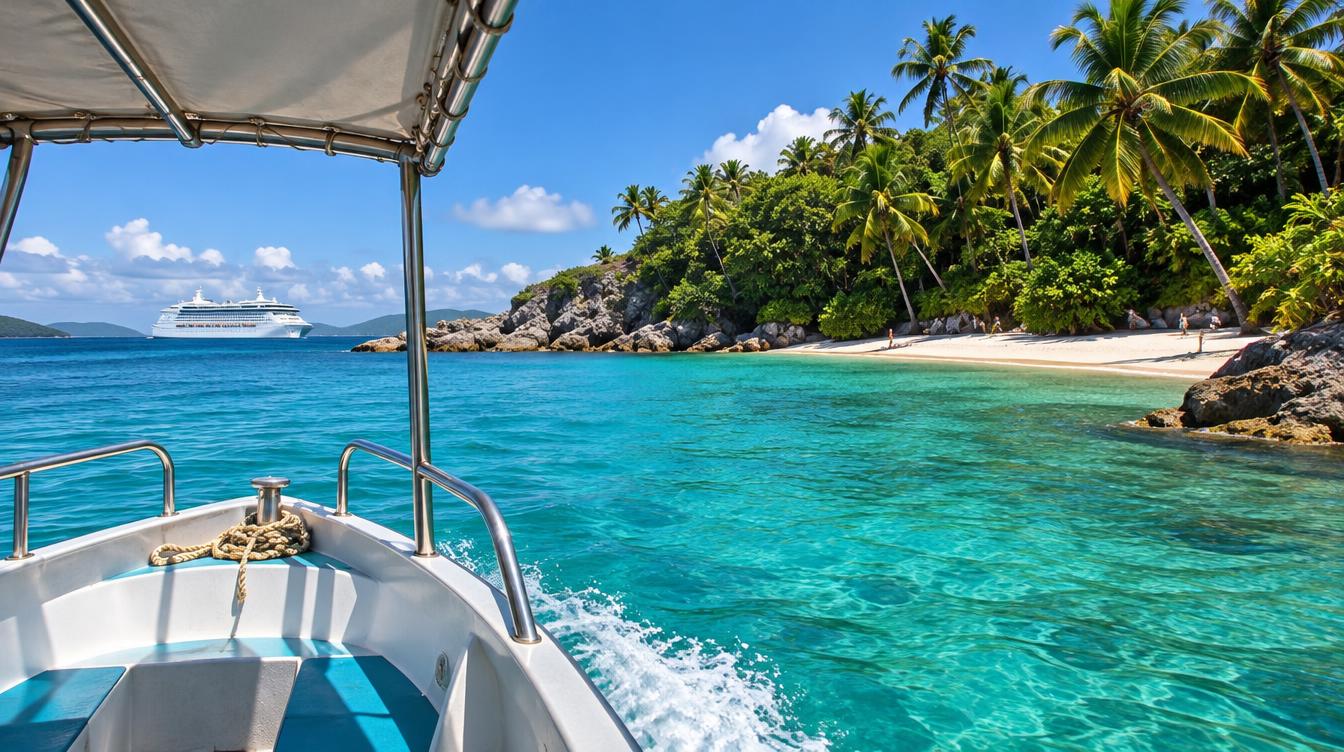
- Is it a tender port, where passengers go ashore by small boat?
- How many hours will you actually have on land?
Distant destinations favour the ship's tour. When the city is ninety minutes away, the guarantee is worth the premium.
Tender ports also favour ship tours, because their passengers are usually taken ashore first. Independent travellers may wait some time for a place on a tender.
Walkable ports favour going alone. Paying for a coach to drive you half a mile is rarely good value.
Booking and timing
Some excursions have very limited capacity. Small-boat wildlife trips, scenic flights and narrow-gauge railways can sell out well before the cruise, particularly in summer.
Book the one or two experiences that matter most to you early. Leave ordinary sightseeing flexible.
Check the cancellation terms. Ship tours are usually refunded if the port is cancelled. Independent operators differ, so read the policy.
Keeping time
The all-aboard time is given in ship's time, which is not always the same as local time. Set a watch to ship time and leave it there.
Plan to be back at the pier at least an hour early. Take the ship's port agent contact details ashore with you. They are printed in the daily programme and are the people to call if something goes wrong.
What to carry
Take your cruise card and photo identification. Some ports require a passport to go ashore, so check the instructions for each day.
Carry a little local currency or small notes for taxis and tips, water, sun protection and a phone with offline maps downloaded.
Accessibility
If anyone in your party has limited mobility, read the activity level carefully. Descriptions such as moderate can involve cobbles, steps and long periods of standing.
Ask whether vehicles have lifts or low steps, and remember that tender boats can be difficult to board in swell. Cruise lines can advise on accessible options for each port.
Groups and private tours
For a family or a group of friends, a private tour is worth pricing. Dividing the cost of a guide and vehicle between six or eight people often comes in below the ship's per-person rate.
You also set the pace, which matters with small children or older relatives.
A simple rule
If the destination is far from the pier, or the port uses tenders, lean towards the ship's tour. If there is a popular activity you want at a better price, use a well-reviewed independent operator with a guarantee. If the town is on the doorstep, walk.
Mix all three across a week, and keep an eye on the clock. The ship leaves on time, and it is a long swim.
Frequently asked questions
Is it better to book excursions through the cruise line?
It is the lowest-risk option, especially for long-distance tours and tender ports, because the ship will wait for its own tours or arrange for you to rejoin it. It usually costs more and involves larger groups. For ports where the attractions are close to the pier, independent options offer better value.
What happens if an independent tour gets back late?
The ship is not obliged to wait, and you would be responsible for the cost of travelling to the next port. Reputable independent operators plan generous margins and many offer a written guarantee. Always return at least an hour before the all-aboard time.
When should I book shore excursions?
Popular or small-capacity tours, such as whale watching, helicopter flights and scenic railways, can sell out weeks ahead in peak season, so book those early. Walking tours and beach days can usually be arranged close to the date or on the day.