Balcony, Oceanview or Inside? Choosing a Cruise Cabin Without Regret
The cabin is the one part of a cruise you cannot change once you sail. Here is how to pick the right type and the right spot on the ship.

Every cruise fare starts with a cabin category, and the gap between the cheapest and the most expensive on the same sailing can be enormous. The ship, the food and the ports are identical. What changes is the room you return to, and how much you will want to be in it.
There is no single right answer. But there is a right answer for the way you travel, and it usually becomes obvious once you ask a few plain questions.
The four basic types
Inside cabins have no window. They are the least expensive, perfectly comfortable and very dark, which some people love for sleeping. If you plan to be out on deck from breakfast to midnight, an inside cabin is simply a place to shower and rest.
Oceanview cabins add a window or porthole that does not open. You get daylight and a sense of where you are, usually for a modest step up in price.
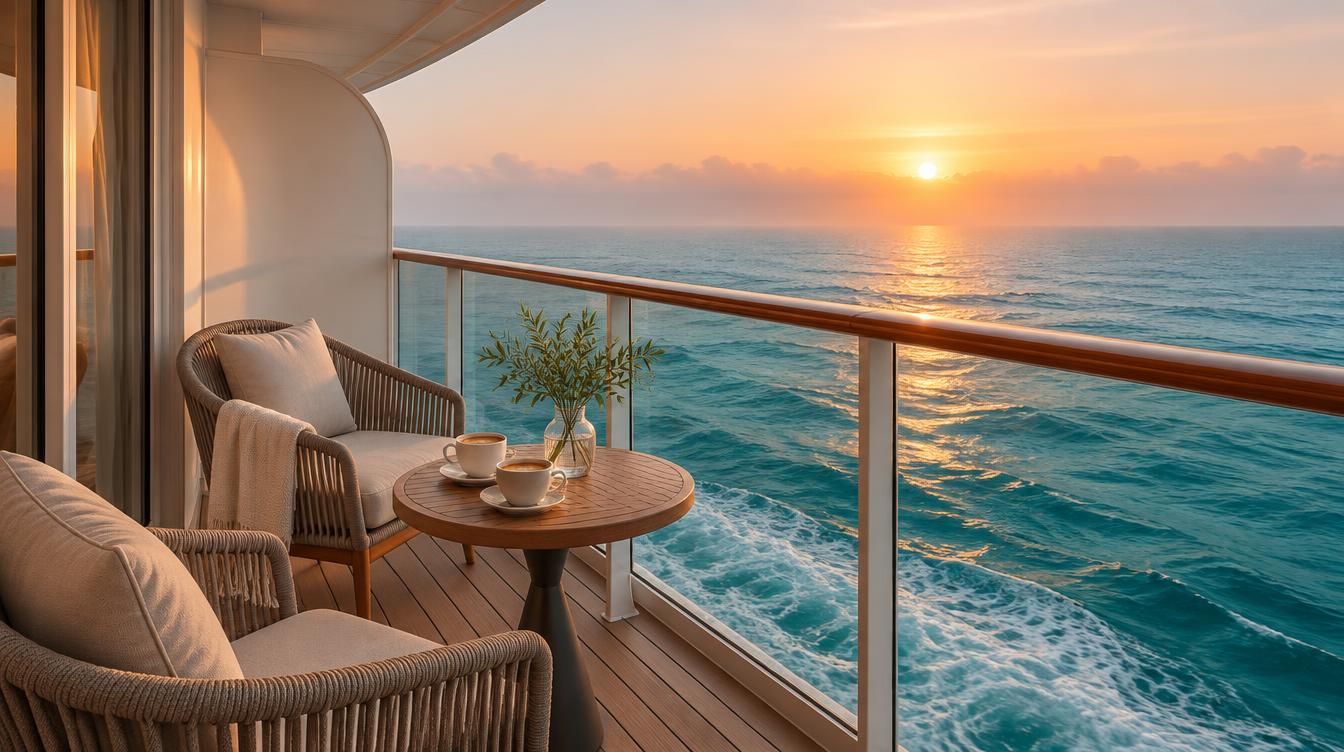
Balcony cabins add a private outdoor space with a couple of chairs. This is now the most common category on newer ships, and for many travellers it changes the whole feel of the trip.
Suites are larger, often with a separate sitting area and extra services. The price rises steeply, and so do the perks.
When a balcony is worth it
A balcony earns its premium on scenic itineraries. In Alaska, the Norwegian fjords or along any coast where the ship sails close to land, you will spend hours out there with a coffee and a pair of binoculars.
It matters less on port-heavy Caribbean or Mediterranean routes where the ship moves mostly at night. If you are ashore all day and asleep while it sails, you are paying for a view of the dark.
Book the balcony for the scenery, not for the square footage.
Location matters more than category
A well-placed inside cabin can be a better choice than a badly placed balcony. Before you choose, open the deck plan and look at what is above, below and beside the cabin.
- Midship, lower decks: the least motion, best if you are prone to seasickness.
- Under the pool deck or buffet: expect chairs scraping from early morning.
- Above the theatre or nightclub: expect bass until late.
- Near the lifts: convenient, with some foot traffic and chatter.
- Far forward: more movement in rough seas, and often a long walk to dinner.
The safest choice is a cabin with other cabins above and below it. Quiet neighbours make for quiet nights.
Motion and where you feel it
Ships pivot around their centre, so the middle of the vessel moves least and the ends move most. Height amplifies the effect. A low, central cabin is the calmest place on board.
Modern ships have stabilisers and most sailings are smooth. But if you know you are sensitive, choosing position over category is the best decision you can make.
Obstructed views and guarantee fares
Some oceanview and balcony cabins look out onto lifeboats or structural steel. They are sold as obstructed view at a discount, and a partial obstruction can be excellent value if daylight is all you want.
A guarantee fare means you choose the category and the cruise line assigns the specific cabin later. It is cheaper, and you may be upgraded, but you give up control over location. It suits flexible travellers and does not suit light sleepers.
| Cabin type | Best for | Think twice if |
|---|---|---|
| Inside | Budget trips, heavy sleepers, busy itineraries | You dislike rooms without daylight |
| Oceanview | Daylight on a budget | You want fresh air in the room |
| Balcony | Scenic routes, slow mornings, couples | The itinerary sails mostly at night |
| Suite | Long voyages, special occasions | The extras do not matter to you |
Space for families and groups
Cabins are compact, and a third or fourth berth is often a fold-down bed. Two connecting cabins can cost about the same as one family suite and give you two bathrooms, which parents of teenagers tend to appreciate.
Solo travellers should look for ships with dedicated single cabins. On most ships a solo passenger in a double pays a supplement that can approach the full second fare.
Timing your booking
The best-located cabins in each category sell first. If position matters to you, book early. If price matters most and you are flexible, late offers can be good, though you take whatever is left.
A simple way to decide
Ask yourself where you will be at seven in the morning. If the answer is on a private balcony watching the coast slide past, book the balcony. If it is in the gym, at breakfast or still asleep, save the money.
Then pick the quietest available cabin in that category, midship if you can. That choice costs nothing extra and improves every night of the trip.
Whatever you choose, remember that the ship is the same for everyone. The cheapest cabin on board still comes with the whole ocean.