River Cruises Explained: What a Week on the Danube Is Really Like
Smaller ships, constant scenery and a town at the end of every gangway. What first-time river cruisers should expect, and what tends to surprise them.

If your picture of a cruise involves water slides and three thousand fellow passengers, a river cruise will come as a surprise. It is a different kind of travel altogether: quieter, slower and much closer to the land.
The Danube is where many people start, and for good reason. In a single week it strings together capital cities, vineyard valleys and small towns that are awkward to reach any other way.
The ship
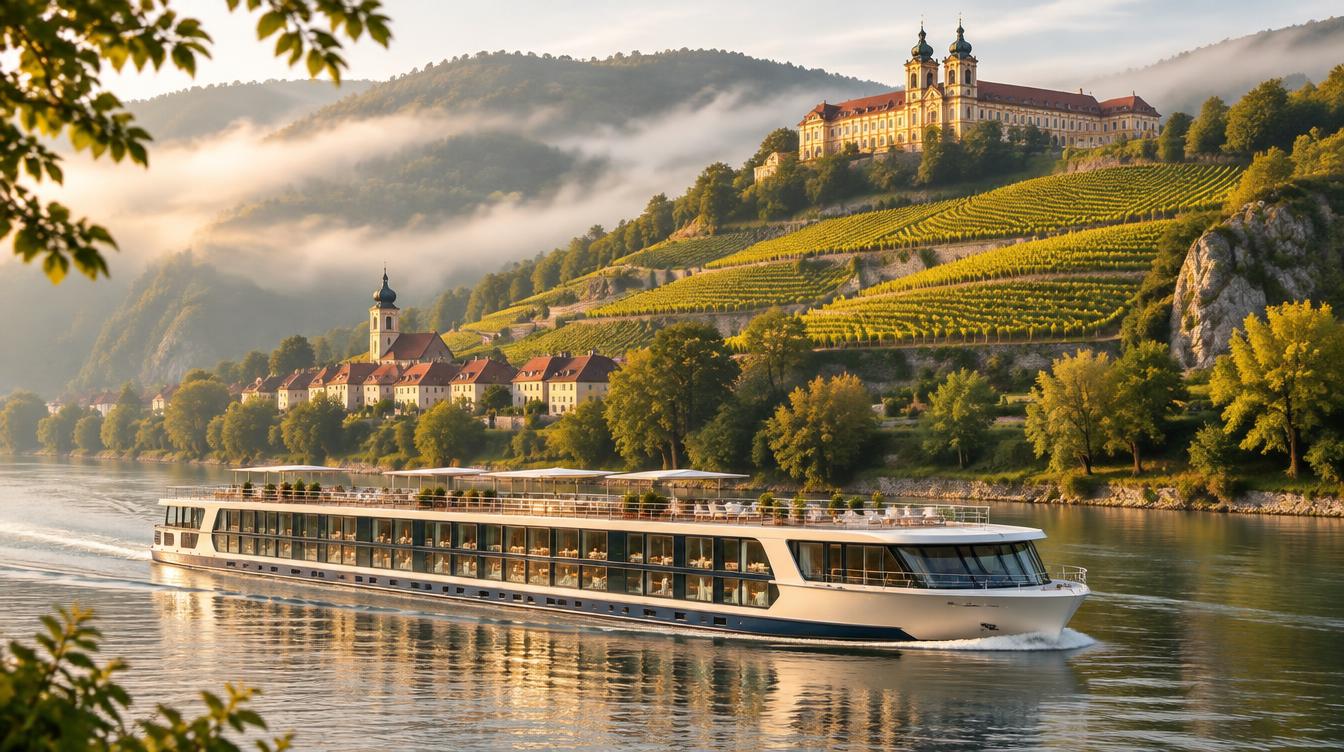
European river ships are built to fit locks and low bridges, which gives them all a similar long, low shape. Most carry between about 100 and 190 passengers.
That size sets the tone. There is one main restaurant, one lounge and a sun deck. You will recognise most faces by the second day, and the crew will know how you take your coffee.
There are no casinos, no theatres and little late-night entertainment. Evenings are for dinner, a drink and perhaps a local musician brought aboard for an hour.
The cabins
Cabins are compact and well designed. Lower-deck cabins sit near the waterline and have small, high windows. Middle and upper decks usually offer floor-to-ceiling glass.
Many ships have what is called a French balcony: a sliding glass door with a railing rather than an outdoor space. It brings in air and the view without taking room from the cabin.
| Feature | River cruise | Large ocean cruise |
|---|---|---|
| Passengers | Around 100 to 190 | Often 2,000 to 6,000 |
| Scenery | Always in view on both banks | Open sea between ports |
| Ports | Usually dock in or near the town centre | Often a transfer from a large terminal |
| Motion | Almost none | Varies with the sea |
| Evenings | Quiet, social | Shows, bars, casinos |
A typical day
The ship usually sails during the night or early morning and ties up after breakfast. Because rivers run through the middle of towns, you often step off the gangway and walk straight into the old quarter.
Most fares include a guided walk in each port. They are a pleasant way to get your bearings, and you are free to wander off on your own whenever you like.
Afternoons often bring a stretch of scenic sailing. On the Danube the highlight is the Wachau Valley in Austria, a winding reach of terraced vineyards, castle ruins and apricot orchards.
On a river, the journey between ports is not dead time. It is the reason you booked.
What is included
River cruise fares tend to bundle more than ocean fares. Shore excursions, wine and beer with lunch and dinner, and Wi-Fi are commonly part of the price.
That makes the headline fare look high beside an ocean cruise, and the final bill look surprisingly close. Compare what is included before you compare the totals.
- Usually included: meals, guided tours, drinks with meals, Wi-Fi.
- Sometimes included: gratuities, airport transfers, all-day drinks.
- Usually extra: flights, premium excursions, spa treatments.
Who it suits
River cruising attracts travellers who like history, food and unhurried days. The average age is higher than on ocean ships, though that has been shifting as lines add cycling tours and more active outings.
Facilities for children are rare, and many ships do not accept very young passengers. Families with teenagers interested in history can enjoy it. Families with small children generally will not.
The things that surprise people
Ships often moor side by side in busy ports. You may open your curtains to find another vessel a metre away, and walk through its lobby to reach the shore. It is normal, and it rarely lasts long.
Locks are another surprise, and usually a pleasant one. Watching the ship rise or fall between concrete walls with a hand's width to spare is oddly absorbing, even at midnight.
Water levels matter. After very dry spells a river can become too shallow, and after heavy rain too high for ships to pass under bridges. When that happens, lines swap ships or use coaches for part of the route.
When to go
Spring brings blossom and mild days. Summer is warm and busy. Early autumn is harvest season in the wine regions and, for many, the best time of all.
Late November and December have their own appeal, when itineraries are built around the Christmas markets of Vienna, Nuremberg and Budapest.
Is it for you?
If you want constant activity, a river cruise may feel too quiet. If you like unpacking once, waking somewhere new and watching a landscape unfold from a deck chair, it may be the most relaxing trip you ever take.
A week on the Danube is a gentle introduction. Most people who try it start planning the Rhine before they are home.