The Mediterranean by Ship: East, West and When to Go
A Mediterranean cruise packs half a dozen countries into a week. Choosing between the two halves of the sea, and the right month, makes all the difference.

- The Western Mediterranean is about great cities: Barcelona, Rome, Florence. The Eastern is about islands, coastlines and antiquity.
- May, June, September and early October offer the best balance of weather and crowds.
- Several famous cities are an hour or more from where the ship docks. Check the distances before you plan a day.
Few itineraries promise as much as a week in the Mediterranean. Rome, Athens, Barcelona, the Greek islands, the Dalmatian coast: places that could each fill a holiday appear one after another outside your window.
That abundance is the appeal and the challenge. A Mediterranean cruise is the most port-intensive trip most people ever take, and a little planning turns it from a blur into something memorable.
Two seas in one
Cruise lines divide the Mediterranean roughly at Italy. The western half and the eastern half feel like different trips.
| Region | Typical ports | Character |
|---|---|---|
| Western | Barcelona, Marseille, Genoa, Livorno for Florence, Civitavecchia for Rome, Naples | Great cities, art, food, architecture |
| Eastern | Venice region, Dubrovnik, Kotor, Athens, Santorini, Mykonos, Turkish coast | Islands, walled towns, ancient sites, swimming |
The Western Mediterranean
Western itineraries are a tour of famous cities. A typical week links Spain, the south of France and the west coast of Italy.
The days are full. This is a route for people who enjoy museums, cathedrals, markets and long lunches, and who do not mind walking.
It is also the easier half to reach, with major embarkation ports at Barcelona and near Rome served by many direct flights.
The Eastern Mediterranean
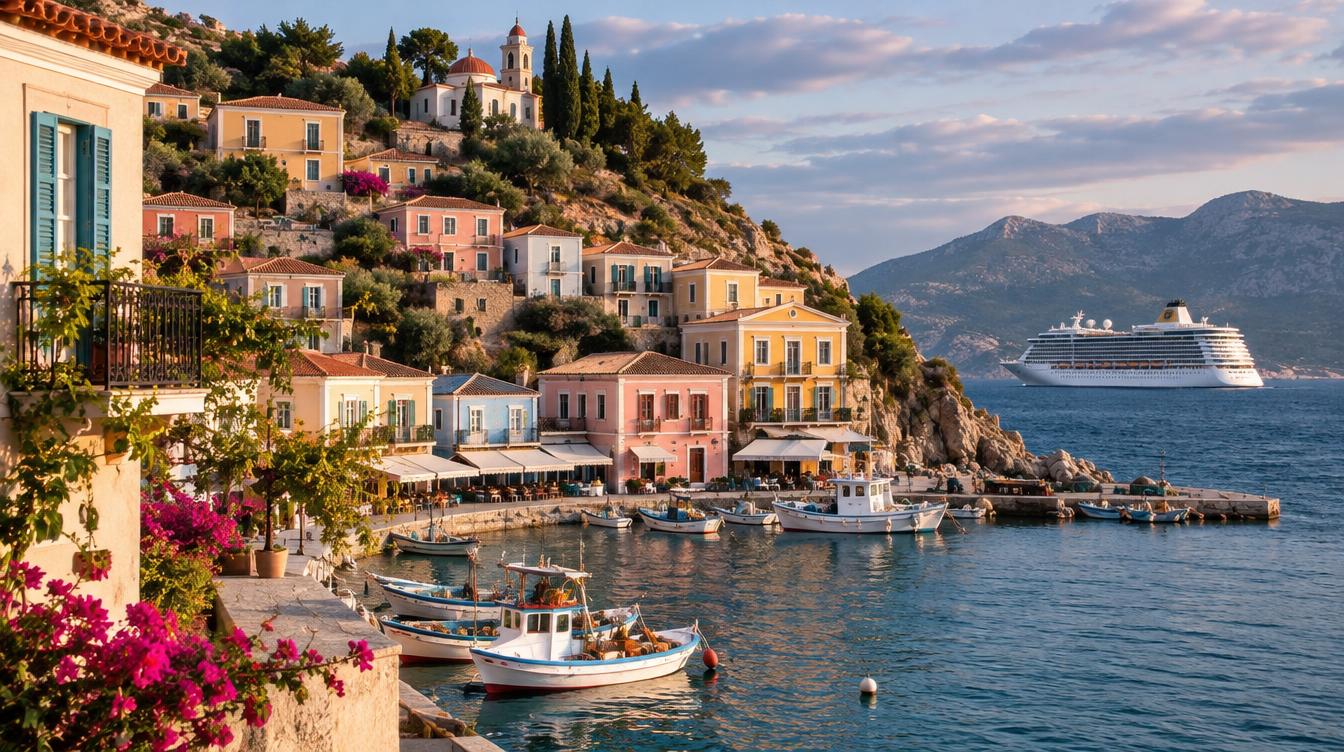
Eastern itineraries are more varied in mood. One day brings the Acropolis, the next a whitewashed island village, the next a medieval walled city on the Adriatic.
There is more time in and beside the water, and the scenery from the ship, especially sailing into Kotor or out past Santorini, is among the best in cruising.
Go west for the cities. Go east for the sea.
The distance problem
Several of the best-known destinations are not where the ship docks. The port is on the coast and the city is inland.
On a day in Rome or Florence, two to three hours go on travel. That leaves five or six hours in a city that deserves five or six days. Decide in advance on two or three things to see, and let the rest go.
Ports such as Barcelona, Naples, Dubrovnik and the smaller Greek islands are different. You can walk or take a short shuttle from the ship into town.
When to go
The Mediterranean season runs from about April to October, with a smaller number of ships sailing through the winter.
Midsummer is hot. Average daytime highs in July and August reach the upper eighties Fahrenheit in Rome and the low nineties in Athens, and the most popular sites are crowded.
- April and May: mild, green and quieter. The sea is still cool for swimming.
- June: warm, long days, busier.
- July and August: hot, crowded and at peak prices.
- September and early October: warm sea, softer light and thinner crowds.
For most travellers, late spring and early autumn are the sweet spots.
Very few sea days
Unlike a Caribbean cruise, a Mediterranean itinerary may have only one day at sea in a week, or none. Each morning brings a new port.
It is exhilarating and tiring. Build in at least one slow day, when you stay on the ship or do no more than stroll into town for coffee.
Tours or on your own?
For distant cities, an organised transfer or tour removes the worry of getting back on time. For ports where the town is at the gangway, exploring independently is easy and usually more enjoyable.
A sensible approach is to book tours for the long-distance days and leave the walkable ports free.
What to wear ashore
Expect cobblestones, steps and heat. Comfortable shoes matter more here than on any other cruise.
Many churches and religious sites ask visitors to cover shoulders and knees. A light scarf or a thin shirt in your bag solves it.
Choosing a ship
Smaller ships can dock closer to the centre of some towns and visit harbours the largest ships cannot enter. Larger ships offer more on board for the rare sea day and for families.
In the Mediterranean, the itinerary matters more than the ship. Compare the hours in each port and where exactly the ship docks.
Before and after
If you can, add a night or two in the embarkation city. Barcelona, Rome, Venice and Athens all reward more time than a cruise allows, and arriving early protects you against flight delays.
One or the other
For a first visit, the Western Mediterranean delivers the landmarks most people dream of seeing. For a second, or for anyone who loves islands and swimming, the East is hard to beat.
Either way, treat the week as an introduction. The best souvenir from a Mediterranean cruise is a short list of places you intend to come back to.
Frequently asked questions
What is the best month for a Mediterranean cruise?
May, June, September and early October are generally the most comfortable, with warm weather and fewer crowds than midsummer. July and August are hot and very busy, especially in the Greek islands and major cities.
Is a Mediterranean cruise good for first-time visitors to Europe?
Yes, as a sampler. You see several countries without changing hotels. The trade-off is limited time in each place, usually eight to ten hours, so it works best as an introduction that shows you where you would like to return.
How far is Rome from the cruise port?
Ships for Rome dock at Civitavecchia, roughly an hour to an hour and a half from the city centre by train or coach. Plan transport in advance and allow plenty of time to return.