Cruising Solo: Supplements, Single Cabins and Making It Sociable
Cruises are priced for two, which makes travelling alone expensive. Here is how the single supplement works, how to avoid it and why a ship is one of the easiest places to travel solo.

AI-assisted article, reviewed and edited by the Voyage Current editorial team. Images are AI-generated. How we work.
- Fares are based on two people sharing. A solo traveller in a standard cabin usually pays a single supplement, which can approach the full second fare.
- Look for dedicated solo cabins and for sailings where lines reduce or waive the supplement.
- Ships make solo travel easy: meals, entertainment and company are all a short walk from your door.
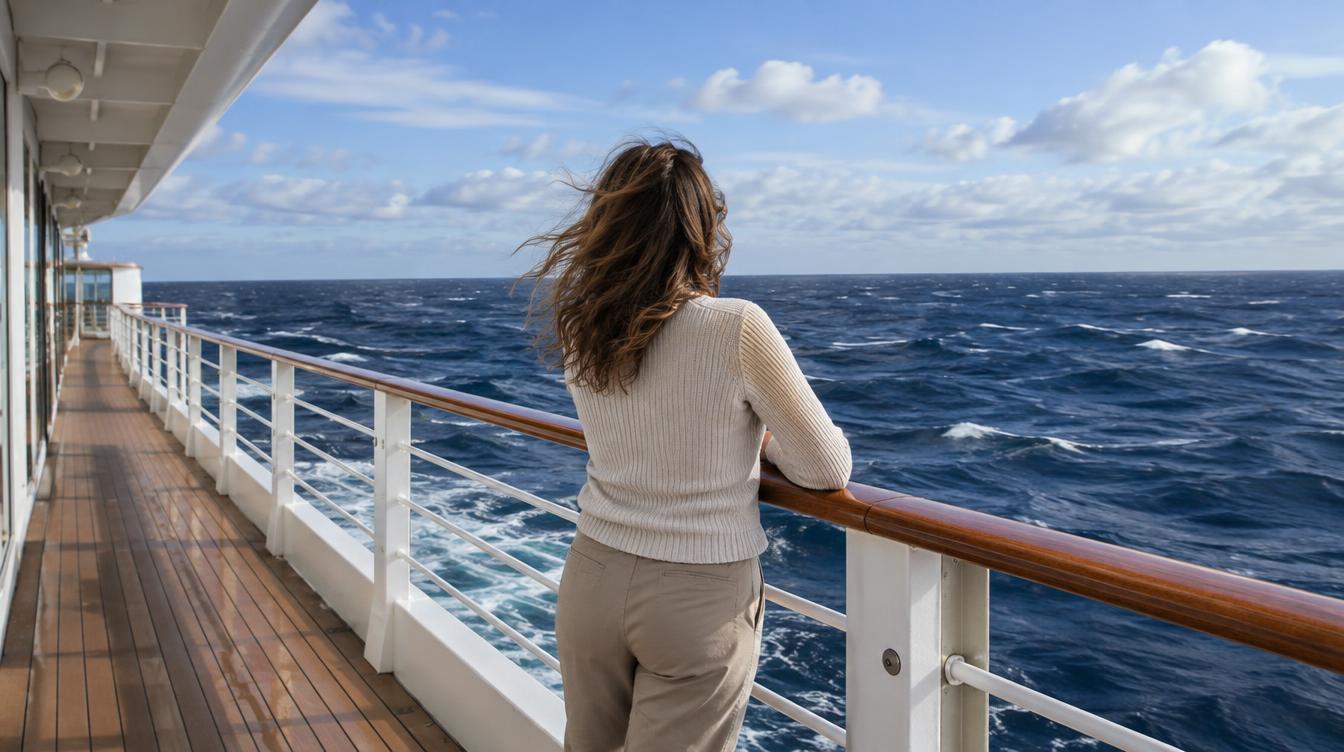
There is a quiet pleasure in travelling alone: your own schedule, your own choices, nobody else's alarm clock. Cruises ought to be ideal for it. Everything is arranged, company is available when you want it and your room comes with you.
The obstacle is the price. Cruise fares are built around two people sharing a cabin, and the solo traveller often pays for the empty half of the bed.
How the single supplement works
Cruise fares are quoted per person, based on double occupancy. When one person books a cabin intended for two, the line charges a supplement to make up for the missing fare.
It varies widely. On some sailings it is a modest percentage. On others it is the full second fare, so one person pays the same as two.
Port fees and taxes are charged per person, so those at least are not doubled.
Solo cabins
A growing number of ships have cabins designed for one. They are smaller than a standard cabin and priced without a supplement, though the fare may still be somewhat higher than half a double.
On some ships these cabins share a private lounge where solo passengers can meet over coffee or a drink. They are limited in number and sell early, so book well ahead.
Reduced and waived supplements
Lines adjust the supplement to fill ships. Watch for offers on particular sailings.
- Shoulder-season departures, when ships are less full.
- Repositioning voyages between regions.
- Late availability a few weeks before sailing.
- River and expedition lines, which run solo promotions fairly often.
A travel agent who specialises in cruising usually knows which lines are currently offering solo deals, and it costs nothing to ask.
The supplement is not a fixed rule. It is a price, and prices move.
Guaranteed shares
A few operators will match solo travellers of the same sex to share a cabin, with each paying the per-person fare. If no match is found, you may get the cabin to yourself at no extra cost.
It suits sociable travellers on a budget. It does not suit light sleepers or anyone who values privacy.
Choosing a ship
The size and style of ship shapes the solo experience more than the destination.
| Ship type | Solo experience | Keep in mind |
|---|---|---|
| Large resort ship | Plenty to do, solo cabins on some, easy to be anonymous | Can feel aimed at families and couples |
| Mid-size and premium | Quieter, hosted solo gatherings common | Fewer solo cabins |
| River ship | Small and sociable, open seating at meals | Higher fares, older crowd |
| Expedition ship | Shared sense of adventure, very easy to meet people | Expensive, more active |
Small ships are the most naturally sociable. With a hundred or so passengers, open seating and shared excursions, you know most people within two days.
Meals
Dining alone is the part solo travellers worry about most, and ships handle it well.
Many offer open seating, where you can ask to join a shared table. Tell the host on the first evening that you are travelling alone and would like company. They do this every night.
If you prefer your own table, that is always available too, as are casual venues and room service for evenings when you would rather read.
Meeting people
Most ships host a gathering for solo travellers early in the voyage, listed in the daily programme. It is worth attending even if such things are not usually your style. It is the quickest way to find a dinner companion or someone to share a taxi ashore.
Activities do the rest. Quizzes, classes, talks and shore excursions provide a reason to talk to the person beside you.
Excursions
Ship-organised tours are an easy way to explore with company, and they come with the reassurance that the ship will not leave without you. Our guide to shore excursions compares the options.
Exploring independently is equally possible. Tell someone your plans, carry the port agent's number and keep a close watch on the time.
Itinerary
Think about the balance of port days and sea days. Sea days are when a ship's social life happens, and they suit people who enjoy the ship itself.
Port-intensive itineraries offer more to see and less time aboard. Neither is better. It depends on whether you travel for the destinations or for the voyage.
Safety and practicalities
Ships are well-staffed, enclosed and monitored, which makes them a comfortable environment for travelling alone. Sensible habits still apply.
- Use the cabin safe for passports and valuables.
- Keep an eye on your drink in bars, as you would anywhere.
- Share your itinerary with someone at home.
- Carry your cruise card, some cash and a charged phone ashore.
The cost of connectivity
If keeping in touch with home matters, price the ship's internet package before you sail. Phone roaming at sea is very expensive.
Many solo travellers find that a daily message home adds to their own peace of mind as much as their family's.
Is it worth it?
A cruise is one of the gentlest ways to travel alone. You are never stranded, never searching for a restaurant after dark and never short of something to do. And when you want solitude, your cabin door closes.
Find a solo cabin or a reduced supplement, choose a ship that suits your temperament and go. Plenty of people who try it once never go back to waiting for someone else to be free.
Frequently asked questions
What is a single supplement on a cruise?
It is an extra charge paid by one person occupying a cabin priced for two. It can range from a small percentage to 100 percent of the per-person fare, meaning a solo traveller may pay nearly as much as a couple would for the same cabin.
Which cruises have no single supplement?
Some ships have cabins designed and priced for one person. Other lines reduce or waive the supplement on selected sailings, most often outside peak season or close to departure. River and expedition lines run these offers fairly regularly, so it is worth asking a travel agent or checking each line's solo offers.
Is cruising safe for solo travellers?
Ships are controlled environments with staff on duty around the clock, which many solo travellers find reassuring. Normal precautions apply ashore: let someone know your plans, keep valuables secure and be back on board well before sailing.